
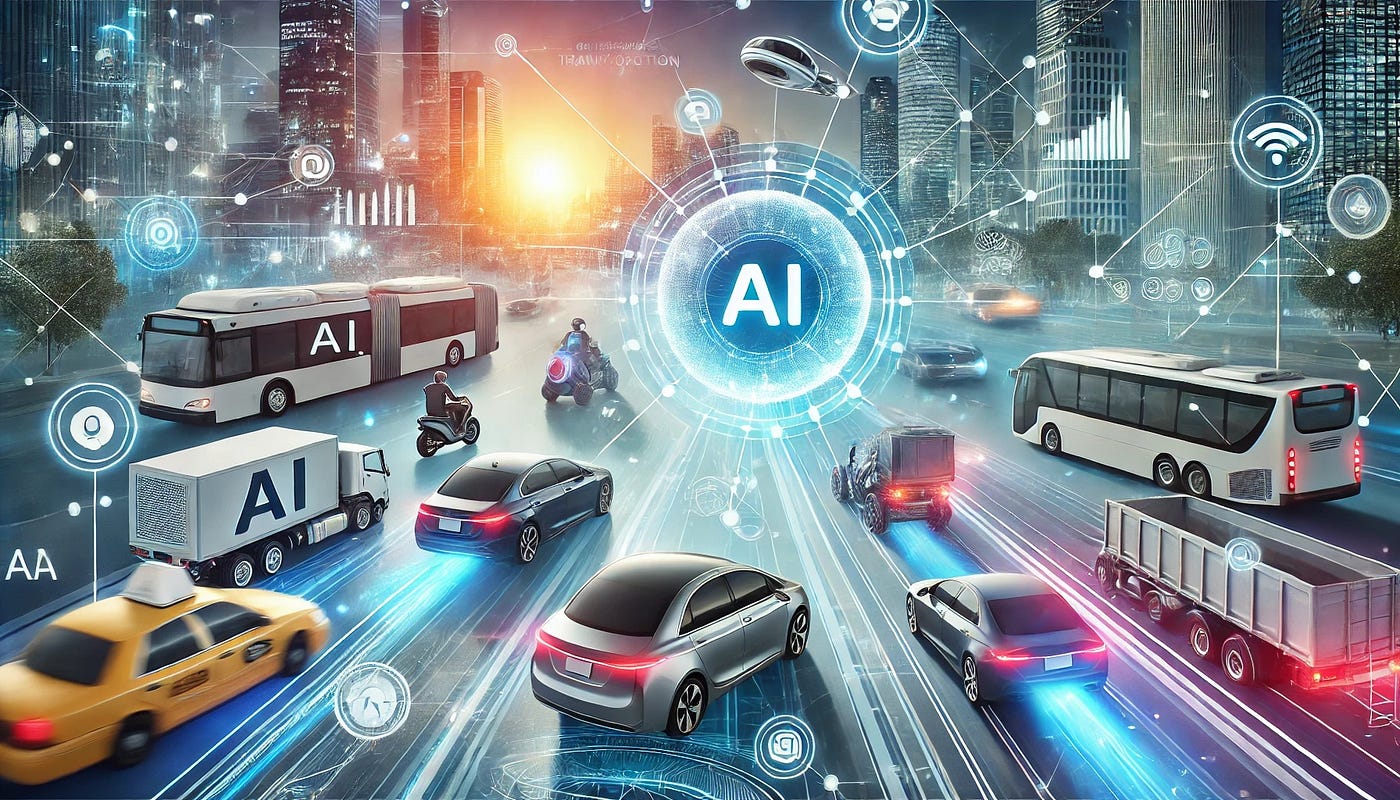
AI in Transportation: Driving the Future of Mobility
Transportation is on the verge of a massive transformation, fueled by the rise of Artificial Intelligence (AI). From self-driving cars and predictive maintenance systems to intelligent logistics and urban traffic management, AI is revolutionizing how we move people and goods across the world.
The Rise of Self-Driving Vehicles
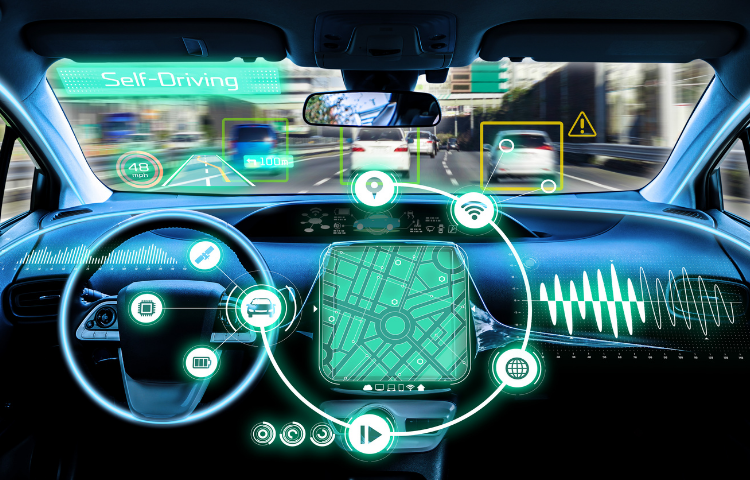
Self-driving cars are perhaps the most recognizable symbol of AI’s role in transportation. These vehicles rely on advanced sensors, computer vision, and deep learning algorithms to perceive their surroundings and make split-second driving decisions. Companies like Tesla, Waymo, and Cruise are already deploying autonomous vehicles in select urban areas, gathering real-world data to improve safety and efficiency.
AI systems in these vehicles constantly process input from LIDAR, radar, cameras, and GPS sensors, building a 360-degree awareness of the environment. Machine learning helps them recognize pedestrians, vehicles, and obstacles — even predicting their movements to prevent accidents.

Intelligent Logistics and Supply Chains
AI is reshaping global logistics by optimizing routes, managing fleets, and predicting supply chain disruptions. Machine learning models can analyze vast datasets — from weather and traffic conditions to shipment histories — to identify the most efficient paths and reduce fuel consumption.
For companies like Amazon and DHL, AI-powered predictive analytics ensure faster delivery times and lower operational costs. Smart warehouses use autonomous robots to sort, package, and move goods with precision, working seamlessly alongside human staff to boost productivity.
Traffic Management and Smart Cities
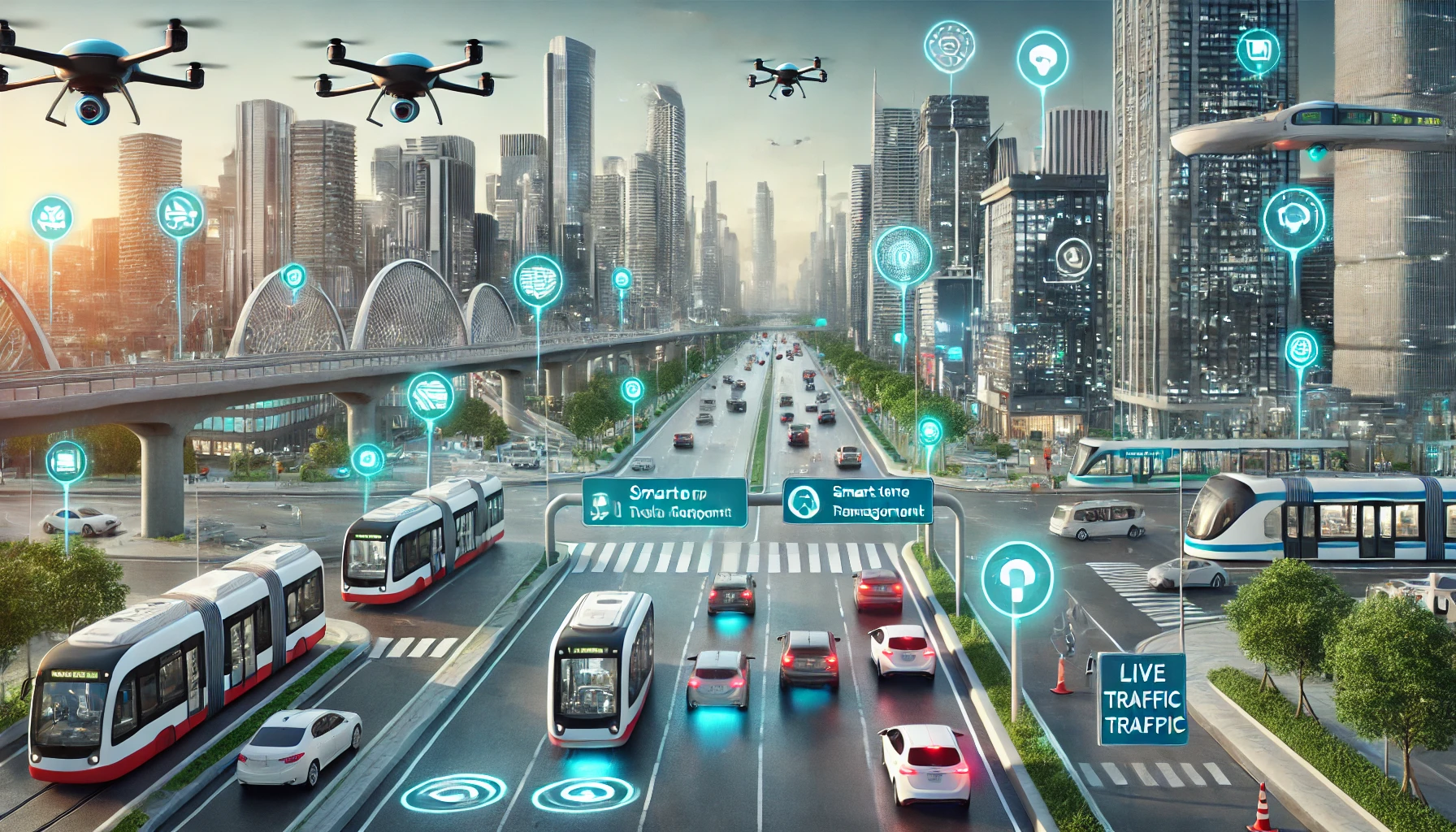
AI-driven traffic control systems are being deployed in major cities to reduce congestion and emissions. By analyzing real-time data from traffic cameras, sensors, and GPS devices, AI algorithms dynamically adjust traffic light patterns and optimize public transport schedules.
For example, Singapore’s Intelligent Transport System uses AI to monitor and manage citywide traffic, reducing average commute times and improving road safety. In the near future, connected vehicles will communicate with one another and with city infrastructure, creating a fully integrated mobility ecosystem.
AI in Public and Freight Transportation
AI is also enhancing efficiency in public transportation and freight systems. Smart buses and trains use AI-powered scheduling systems to adjust frequency based on passenger demand, while freight companies are using predictive models to forecast cargo loads and prevent bottlenecks at ports.
In aviation, AI assists air traffic controllers and pilots by providing predictive insights into weather patterns, turbulence, and maintenance requirements — ensuring safer and smoother flights.
Challenges and the Road Ahead
Despite these advancements, the integration of AI in transportation poses challenges such as regulatory uncertainty, data privacy, and ethical concerns surrounding decision-making in autonomous systems. Ensuring that AI systems prioritize human safety and transparency remains a global priority.
As AI continues to evolve, it promises to redefine how we think about movement. The vehicles and cities of the future won’t just be connected — they’ll be intelligent, sustainable, and adaptive to human needs.
← Back to Blog