
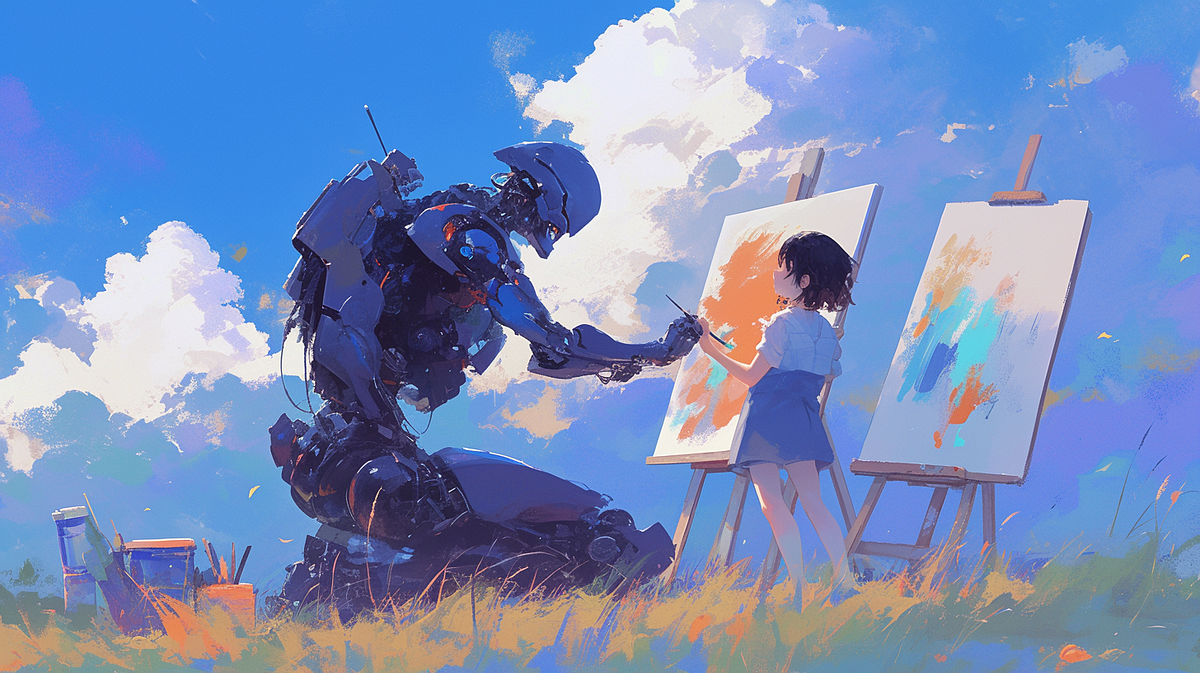
AI and Art: When Machines Become Creators
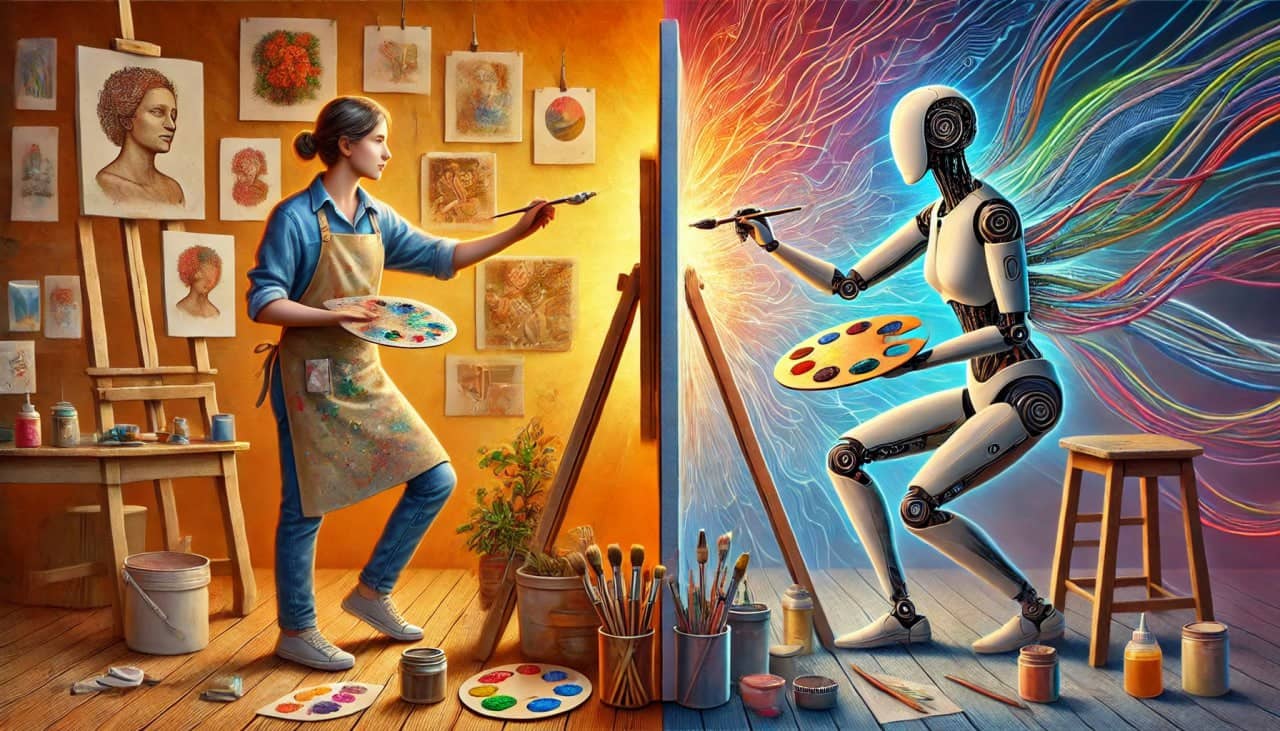
Artificial Intelligence has begun to blur the lines between technology and human creativity. From generating paintings that sell at auctions to composing music and writing poetry, AI is stepping into the realm of artistic expression — a space once thought to be uniquely human.
The Rise of Creative Algorithms
AI’s role in creativity began with pattern recognition — learning from thousands of examples to replicate artistic styles. Today, advanced neural networks like GANs (Generative Adversarial Networks) and diffusion models power tools such as DALL·E, Midjourney, and Stable Diffusion, enabling machines to generate breathtaking artworks from simple text prompts.
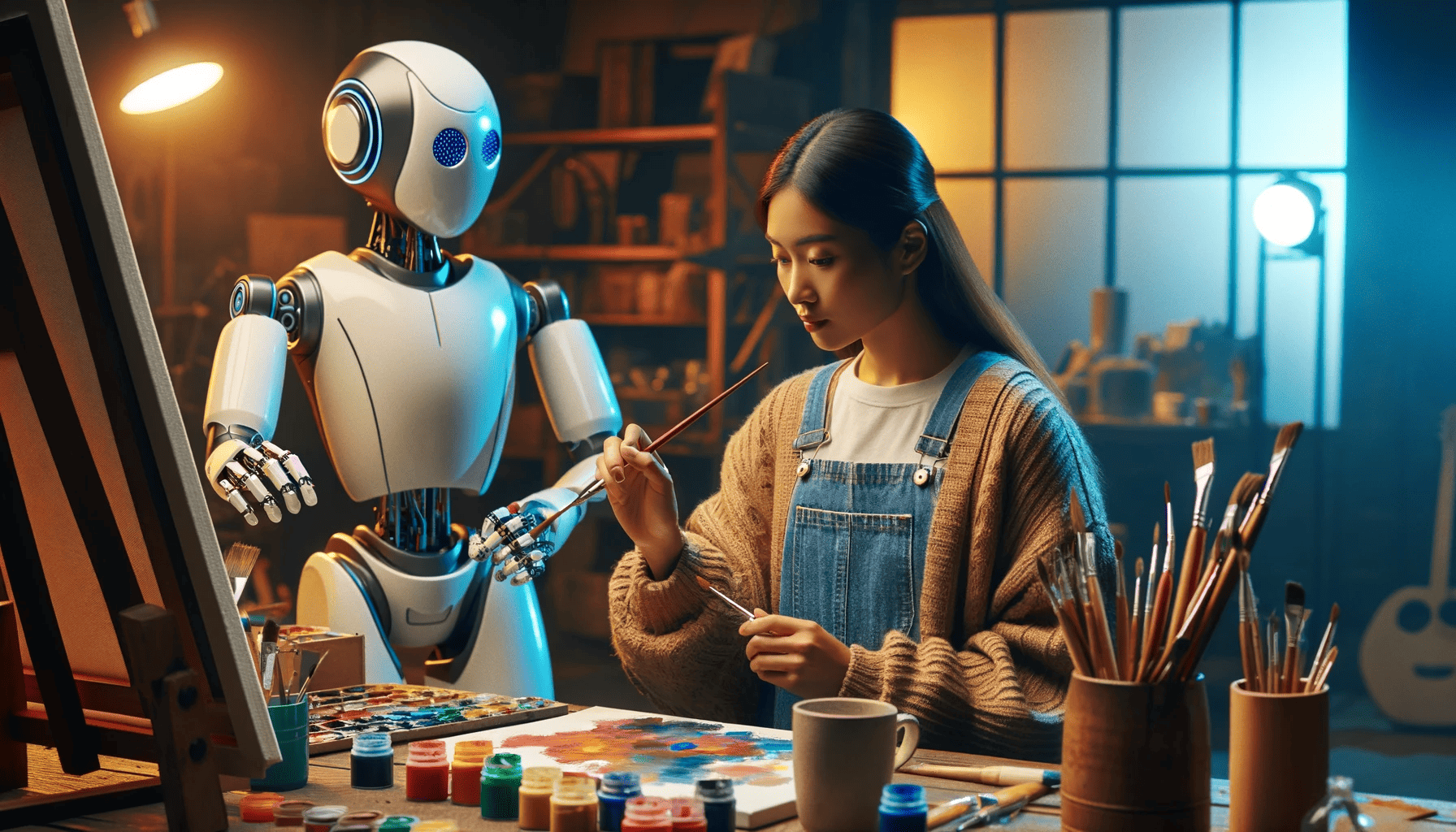
These systems learn from vast datasets of images and art styles, understanding composition, lighting, and emotion. Artists are using AI as a co-creator, a digital partner that brings new possibilities to visual storytelling and expression.

AI in Music and Literature
AI’s creative abilities extend beyond the visual arts. Tools like AIVA and Amper Music can compose symphonies, film scores, or ambient soundtracks in seconds. In literature, models like GPT assist writers with idea generation, editing, and storytelling — transforming the way humans write and create narratives.
For example, AI-assisted writing tools can adapt tone, rhythm, and vocabulary based on the reader’s emotions or cultural context, allowing for more personalized storytelling experiences.
The Collaboration Between Humans and Machines
AI’s creativity doesn’t come from emotion or intention — it comes from computation and pattern discovery. However, when combined with human intuition, imagination, and emotional depth, the result can be extraordinary. Many artists now view AI as a partner rather than a threat.
Collaborative projects like “The Next Rembrandt” — where an AI analyzed Rembrandt’s style and created a new painting — show how technology can resurrect, reinterpret, and reimagine classic art forms for the modern world.
Ethical and Artistic Questions
AI’s entry into the creative domain raises deep philosophical and ethical questions. Who owns AI-generated art? The developer, the user, or the algorithm itself? Should AI-generated works be protected under copyright law? And what happens when machines start to mimic the style of living artists without permission?
These questions are pushing policymakers and creative communities to rethink intellectual property rights in the age of intelligent creativity.
The Future of Creativity
The future of art lies in collaboration — where human inspiration meets machine precision. AI tools can help democratize creativity, enabling anyone, regardless of skill level, to express their imagination visually or musically. This fusion of art and AI could usher in a new cultural renaissance, one defined not by competition, but by co-creation.
As AI continues to evolve, so too will our understanding of creativity. Rather than diminishing human artistry, it challenges us to think deeper about what makes art — and the artist — truly unique.
← Back to Blog